

(757) 335-3455
How Checking Your Vehicle for Recalls Could Save You Hundreds—or Thousands
That strange noise, warning light, electrical problem, or engine issue might not be something you have to pay for yourself.
Before spending hundreds—or even thousands—of dollars repairing a vehicle problem, it’s worth checking whether your vehicle has an open safety recall.
What Is a Vehicle Recall?
A recall happens when a vehicle or certain equipment has a safety-related defect or does not meet federal safety standards. Depending on the recall, the manufacturer may repair the problem, replace the defective part, or provide another remedy at no charge to the vehicle owner.
And here's the important part: you don't necessarily have to be the original owner. If you bought the vehicle used, an open recall may still apply to your vehicle.
How Do You Check for Recalls?
It only takes a few minutes.
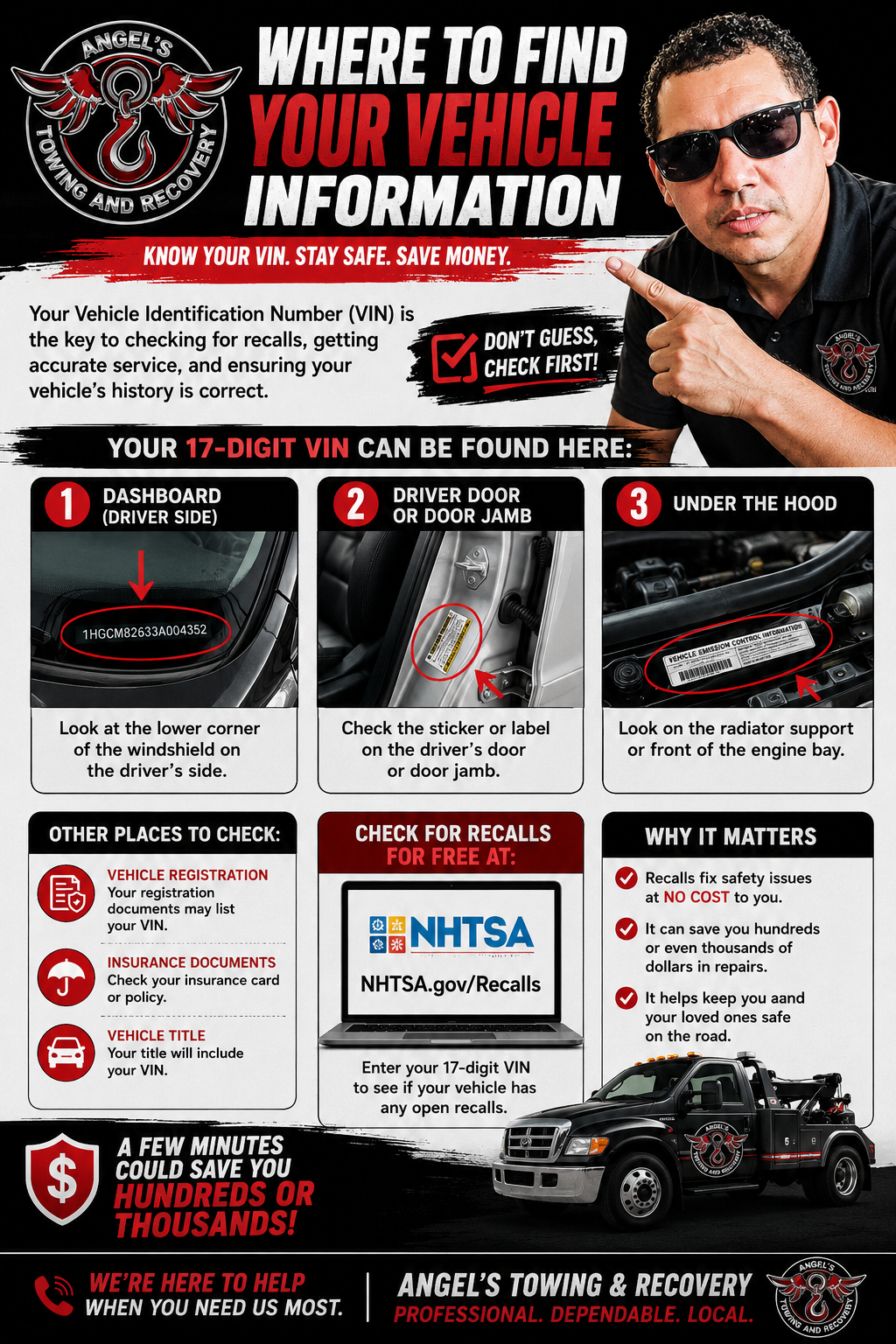
Find your vehicle's 17-digit VIN (Vehicle Identification Number). You can usually find it:
- On the driver's side of the dashboard near the windshield
- On the driver's door or door jamb
- On your registration or insurance documents
Then visit the official National Highway Traffic Safety Administration (NHTSA) recall website and enter your VIN:
NHTSA.gov/Recalls
You can also contact a dealership for your vehicle's manufacturer and ask them to check your VIN for open recalls.
Here's Where You Could Save Serious Money
Imagine your vehicle starts having an electrical problem. You take it to a repair shop and find out the repair could cost $1,000 or more.
But what if the failed component is covered by an existing recall?
Instead of immediately paying for the repair yourself, checking your VIN could reveal that the manufacturer has a recall covering that exact problem.
That could potentially turn a large repair bill into a manufacturer-covered repair.
That's why we recommend checking for recalls before authorizing an expensive repair, especially when the problem involves something that could affect vehicle safety.
Already Having Problems? Check Before You Pay
If your vehicle is experiencing problems with the brakes, steering, airbags, fuel system, electrical system, engine components, or other safety-related equipment, take a few minutes to check for recalls.
Having a similar problem doesn't automatically mean your repair is covered. The recall must apply to your specific VIN, and the manufacturer or authorized dealer will determine whether the vehicle qualifies for the recall remedy.
But checking is FREE—and those few minutes could potentially save you a lot of money.
Don't Ignore an Open Recall
Recalls aren't only about saving money. They're issued because a defect may create a safety risk.
If you discover an open recall, contact an authorized dealership for your vehicle's manufacturer and ask how to have the recall completed.
And if your vehicle isn't safe to drive to the dealership, that's where a professional towing company can help.
Angel's Towing & Recovery
If you're dealing with a breakdown or a vehicle that isn't safe to drive in Virginia Beach, Norfolk, Chesapeake, or the surrounding Hampton Roads area, Angel's Towing & Recovery is here to help get your vehicle where it needs to go safely.
Before you pay for that expensive repair, check your VIN for recalls. A few minutes of research could save you hundreds—or even thousands—of dollars.
Have you ever discovered that a vehicle problem you were having was actually covered by a recall?